Purpose
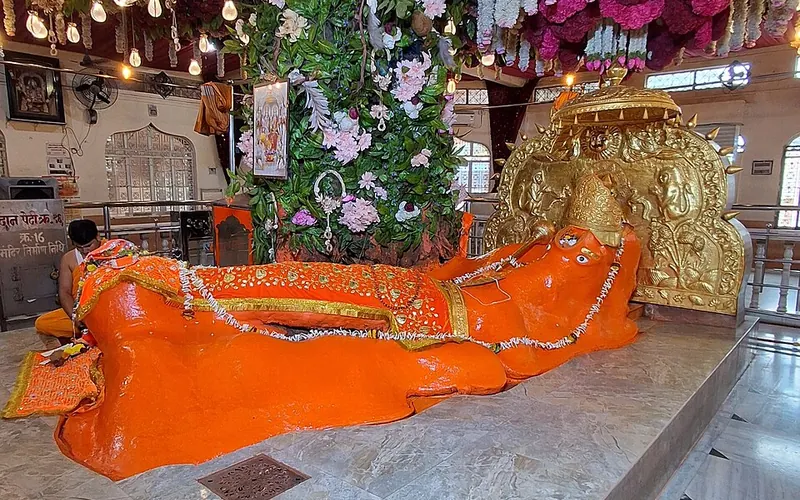
Sundarkand narrates Hanuman's leap across the ocean and his discovery of Sita. Families hold the path on Tuesdays or Saturdays, before exams and interviews, or during a hard stretch to remember that devotion and effort move mountains.
Benefits
- Uplifting group recitation, easy to join online
- Traditionally done for courage and removing obstacles
- Popular during Saturn periods
- Ends with Hanuman aarti and prasad
When to perform
Tuesdays and Saturdays, Hanuman Jayanti, or any time the family needs strength.
Vidhi — step by step
- Sankalp — the family states names, gotra, place and purpose of the puja
- Ganesh Puja and Gauri-Ganesh invocation for an obstacle-free ritual
- Kalash sthapana and Punyahavachan (purification)
- Ram Darbar and Hanuman puja
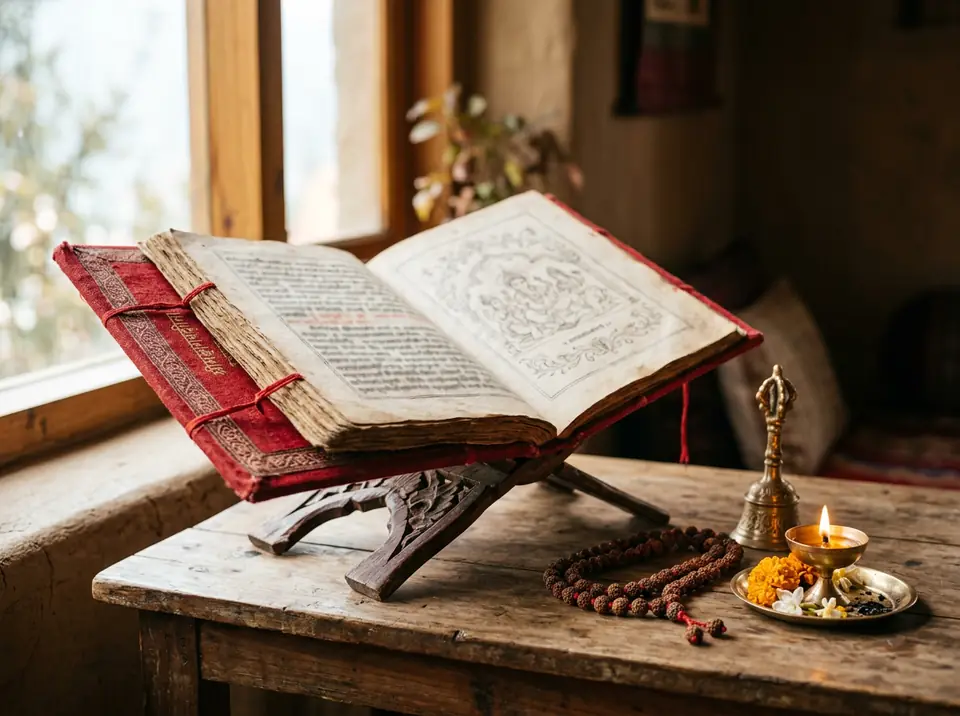
- Complete Sundarkand path (Ramcharitmanas)
- Hanuman Chalisa and Ram stuti
- Aarti with camphor and ghee lamp
- Pushpanjali, prayer for forgiveness (kshama prarthana) and distribution of prasad
Samagri (items needed) – and where to find it abroad
For online pujas we send a printable list before the day. Most items are sold at Indian grocery stores and by online Indian grocers in the USA, UK, Canada and Australia; the list marks what is essential and suggests a substitute for anything you can't find locally. For tirth pujas, our pandits arrange everything.
- Kalash (copper/brass pot) with mango leaves and coconut
- Roli, kumkum, haldi, chandan and akshat (unbroken rice)
- Fresh flowers and garlands
- Ghee lamp (diya), cotton wicks, camphor, incense
- Fruits, sweets for naivedya, betel leaves and supari
- Red and yellow cloth, sacred thread (mauli)
- Panchamrit (milk, curd, ghee, honey, sugar)
- Ram Darbar / Hanuman photo
- Sindoor and jasmine oil (chameli)
- Boondi laddoo or gud-chana
- Ramcharitmanas
What to set up at home
- A clean, quiet corner or table facing east or north if you can, with a cloth for the altar (chowki).
- A picture or murti of Lord Hanuman, a lamp (diya), incense and a small plate (thali) for offerings.
- The samagri from our list laid out within reach, plus a jug of water and a small bowl for achaman.
- A phone or laptop on a stand so pandit ji can see the altar, with charger plugged in and notifications muted.
- Names, gotra and the wish (sankalp) for each family member written down, so the sankalp goes smoothly.
Duration & pandits
2.5 – 3 hours; 1–3 (with music) pandit(s).
Booking from abroad: time zones & what we send you
You choose a date and send a request (or message us on WhatsApp). We reply with a muhurat for your city, written in your local time and in IST, because our pandits work from India. Daylight-saving changes in the USA, UK, Canada, Australia and New Zealand shift the gap to India by an hour, so we recheck the time when a clock change falls near your date.
- Before the puja: the confirmed time in both zones, the dakshina, the samagri list and a short guide to setting up the altar.
- On the day: a Zoom / Google Meet / WhatsApp video link. Relatives in India or other countries can join the same call.
- Language: the mantras are in Sanskrit; pandit ji explains each step in Hindi or English.
How you'll know it was done
The puja is not done out of sight: it happens live on the video call with you. Pandit ji reads out the sankalp with your names, gotra and wish while you watch, and guides each offering you make at home. You receive the recording after the puja, and for pujas at a tirth in India we also send photos. Every muhurat is confirmed to you in writing beforehand.
Also available at a tirth in India
New to online puja? Read how online puja works · Your pandit: Pandit Shastri Gyan Nidhi Pandey · More Paths & recitations
Puja is a spiritual practice. We do not promise specific outcomes, and puja is never a substitute for medical, legal or financial advice.